What Is Acumatica?
ElevatIQ Inc highlights that Acumatica stands out as one of three cloud-native ERP systems alongside NetSuite and Sage Intacct. It boasts robust multi-branch functionalities, making it particularly advantageous for retail-focused businesses. Additionally, it can accommodate various business models within a single database, covering sectors such as manufacturing, distribution, construction, and field service. This versatility enhances its appeal for diverse manufacturing and distribution operations. However, due to its limited global operational features, it mainly caters to companies based in the US and UK. As a result, it is ideally suited for businesses with revenues between $10 million and $100 million, with a significant portion of Acumatica’s clientele falling within this range.
What is Microsoft Dynamics 365 Finance?
Microsoft Dynamics 365 F&O, as noted by ElevatIQ Inc, frequently ranks as the third option for larger global enterprises, trailing behind SAP S/4 HANA and Oracle Cloud ERP. It boasts a robust ecosystem built on modern, cloud-native technologies, demonstrating effectiveness across a range of industries. This system stands out for its ability to support multiple global business models within a single database, making it particularly suitable for smaller enterprise companies. While it serves well as a corporate ledger for large organisations, it does not yet match the proven track record of other leading enterprise systems that can handle workloads reaching millions of journal entries per hour, which is often required by Fortune 1000 companies.
For more visit: https://www.elevatiq.com/post/acumatica-vs-ms-dynamics-365-fo-independent-review/
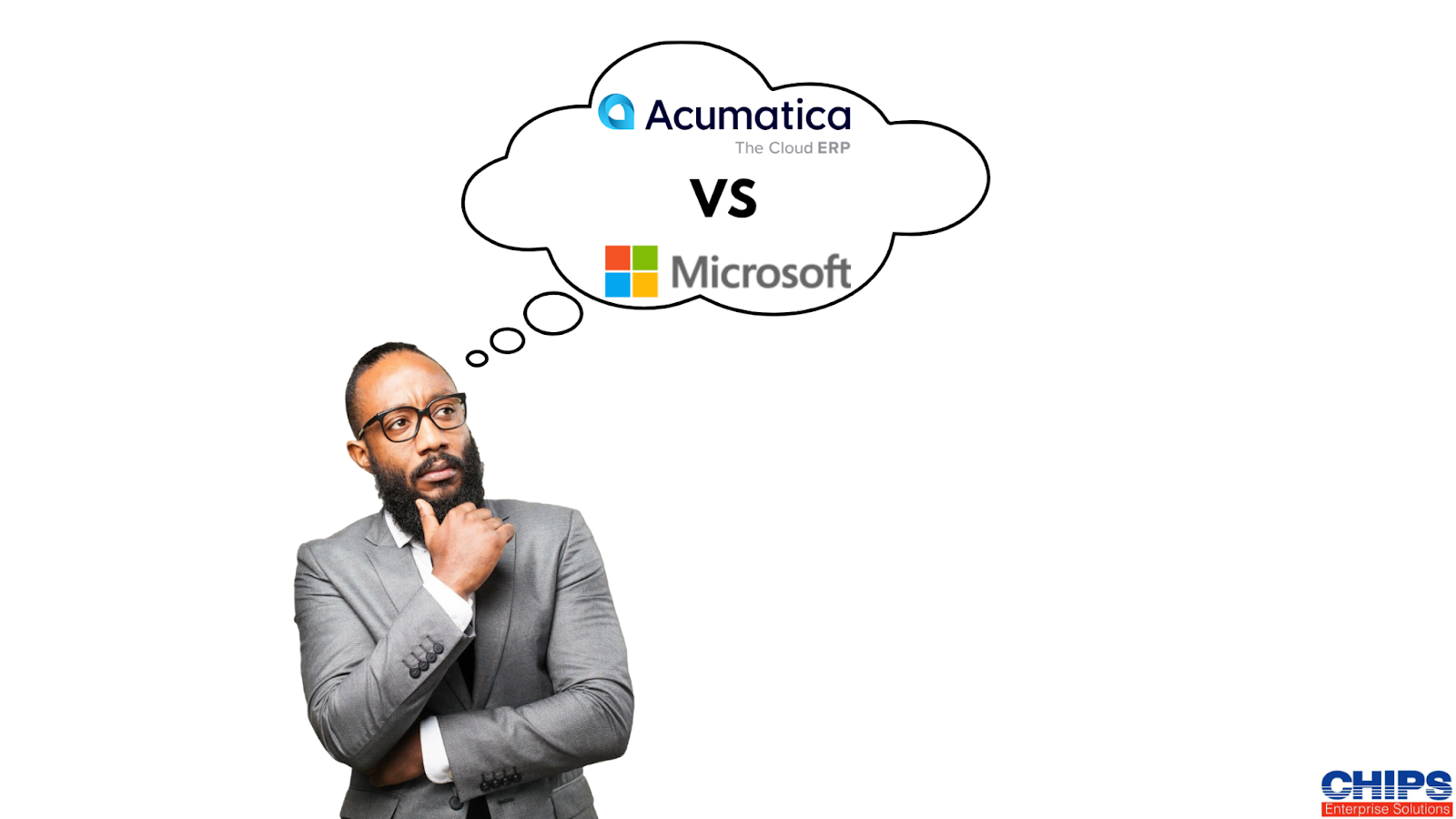
Across essential criteria like features, pricing, and industry suitability. Both are powerful, cloud-based ERP systems, but each has distinct strengths that make them better suited to specific business needs.
1. Core Features

Acumatica Cloud ERP
Financial Management: Offers comprehensive financial tools with some that are still yet to be introduced in Zimbabwe, including accounts payable, accounts receivable, payroll, and financial reporting.
Inventory and Order Management: Strong in supply chain and inventory control, Acumatica is ideal for companies with complex distribution needs.
Project Management: Includes tools to track project costs, manage contracts, and forecast project budgets, making it suitable for construction and project-focused industries.
Manufacturing Management: Features planning, scheduling, and production management tools that are ideal for manufacturing operations.
Customisation and Flexibility: Known for its flexibility, Acumatica allows extensive customisation to meet specific business needs and can easily scale with growing companies.
AI and Machine Learning: Acumatica has begun integrating AI for predictive analytics and enhanced automation.
Microsoft Dynamics 365
Comprehensive Business Suite: Offers ERP and CRM in one platform with extensive integration across Microsoft’s ecosystem (e.g., Office 365, Teams, Power BI)
Financial and Supply Chain Management: Strong finance and supply chain capabilities, especially suited for enterprises managing global operations.
Field Service and Customer Service: Dynamics 365 offers strong field service and customer service management, which is ideal for businesses with service-based models.
AI and Analytics: Dynamics 365 has advanced AI-driven insights with integration through Power BI and Azure, enabling real-time decision-making.
Retail and Commerce: Dynamics 365 offers dedicated retail solutions, making it suitable for eCommerce and retail businesses.
Integration with Microsoft Products: Seamless integration with tools like Outlook, SharePoint, and Power Automate provides added functionality for businesses heavily reliant on Microsoft tools.
2. Pricing Models

Acumatica
Consumption-Based Pricing: Acumatica’s pricing model is based on resources consumed rather than the number of users, which can be beneficial for companies with many users or seasonal employees.
Tailored Packages: The ERP is available in tailored packages depending on business needs (e.g., Financial Management, Distribution, Manufacturing).
Annual Subscription and SaaS: Subscription-based pricing offers flexibility, and companies can choose on-premises or cloud deployment.
Transparency and Lower Cost for Small Businesses: Acumatica is often considered a more affordable option for small to medium businesses, especially those scaling their workforce.
Microsoft Dynamics 365
Per-User, Per-Month Pricing: Dynamics 365 pricing is typically on a per-user, per-month basis, which may add up for larger organisations with many users.
Modular Pricing: Pricing is modular; businesses can purchase only the modules they need (Finance, Sales, Customer Service, and more.), making it adaptable.
Enterprise-Level Packages: Microsoft offers packages and bundles that can integrate additional services like Power BI and Azure for enhanced functionality but can increase costs.
Flexible Cloud and Hybrid Deployment: Dynamics 365 supports both cloud-based and hybrid deployment options, though the cloud version is more cost-effective in the long run.
3. Industry Suitability

Acumatica Cloud ERP
Manufacturing and Distribution: Strong capabilities in managing supply chains, inventory, and distribution processes make Acumatica ideal for manufacturing, distribution, and wholesale businesses.
Construction: With project-based management and time/cost tracking features, Acumatica is widely used in construction and real estate.
E-commerce and Retail: Acumatica’s integration with e-commerce platforms like Shopify helps businesses in the retail sector manage online sales, inventory, and shipping.
Professional Services: Customisable to meet the needs of service-focused businesses, especially for small to medium-sized companies looking for high scalability at an affordable price.
Microsoft Dynamics 365
Large Enterprises and Global Organisations: Dynamics 365 is well-suited for large, complex organisations that require sophisticated financial, supply chain, and operational functionality.
Healthcare, Retail, and Government: Strong in these regulated industries due to Microsoft’s compliance features and robust security.
Service-Based and Field Operations: The platform has specialised features for field service management, making it a fit for companies that provide maintenance, repair, or customer service.
Professional Services and Financial Services: Dynamics 365’s strong CRM, financial, and operational management features make it popular in the consulting, finance, and accounting sectors.
4. Integration and Ecosystem Compatibility

Acumatica Cloud ERP
Third-Party Integrations: Acumatica has open APIs, making it easier to integrate with a wide range of third-party apps, including Salesforce, Avalara, and Adobe Sign.
Partner Ecosystem: Acumatica has a strong partner network offering various add-ons, enhancing its core ERP functionality.
Flexible API and Developer-Friendly: Acumatica supports RESTful APIs, making it highly adaptable for companies wanting to create custom integrations.
Microsoft Dynamics 365
Microsoft Ecosystem Integration: Seamless integration with Microsoft Office Suite, Power BI, Teams, and Azure makes Dynamics 365 a natural fit for businesses already using Microsoft products.
Customisable with Power Platform: Dynamics 365 integrates deeply with Microsoft Power Platform, enabling low-code development, automated workflows, and data visualisation.
Advanced Analytics and Machine Learning: Built-in tools with Azure allow for extensive data analytics, predictive insights, and AI functionalities.
5. Strengths and Weaknesses

| Feature | Acumatica Cloud ERP | Microsoft Dynamics 365 |
| Strengths | Flexible pricing model; Excellent project and supply chain management; Strong partner ecosystem | Comprehensive ERP and CRM suite; Extensive Microsoft integration; Suitable for large, global enterprises |
| Weaknesses | Limited native CRM (requires third-party add-ons); Fewer industry-specific options | Per-user pricing can get costly; Complexity may require longer implementation and onboarding |
Conclusion
Acumatica is ideal for small to medium-sized businesses looking for a highly flexible ERP system that can scale as they grow. Its consumption-based pricing and strong customisation options make it an excellent choice for industries like manufacturing, distribution, and construction.
Microsoft Dynamics 365 is more suited for large enterprises, especially those with global operations that require a comprehensive ERP and CRM system with robust financial and operational tools. Dynamics 365 shines for organisations already integrated into the Microsoft ecosystem, making it ideal for highly regulated and service-focused industries.
Both platforms provide a wide range of features, but the best option for you will depend on your organisation’s size, budget, and specific industry requirements. Feel free to reach out to us at +263 (0) 867 700 3888, email us at sales@chips.co.zw, or visit us at 3 Lezard Ave, Milton Park, Harare, Zimbabwe. We are here to assist you with the specifications of our Acumatica Cloud ERP system that will meet your needs.